
Storm Shelter Questions, Answered
Straight answers from a local installer — no fluff, no sales pitch. If you don't see your question here, call us.
Storm Shelters — General
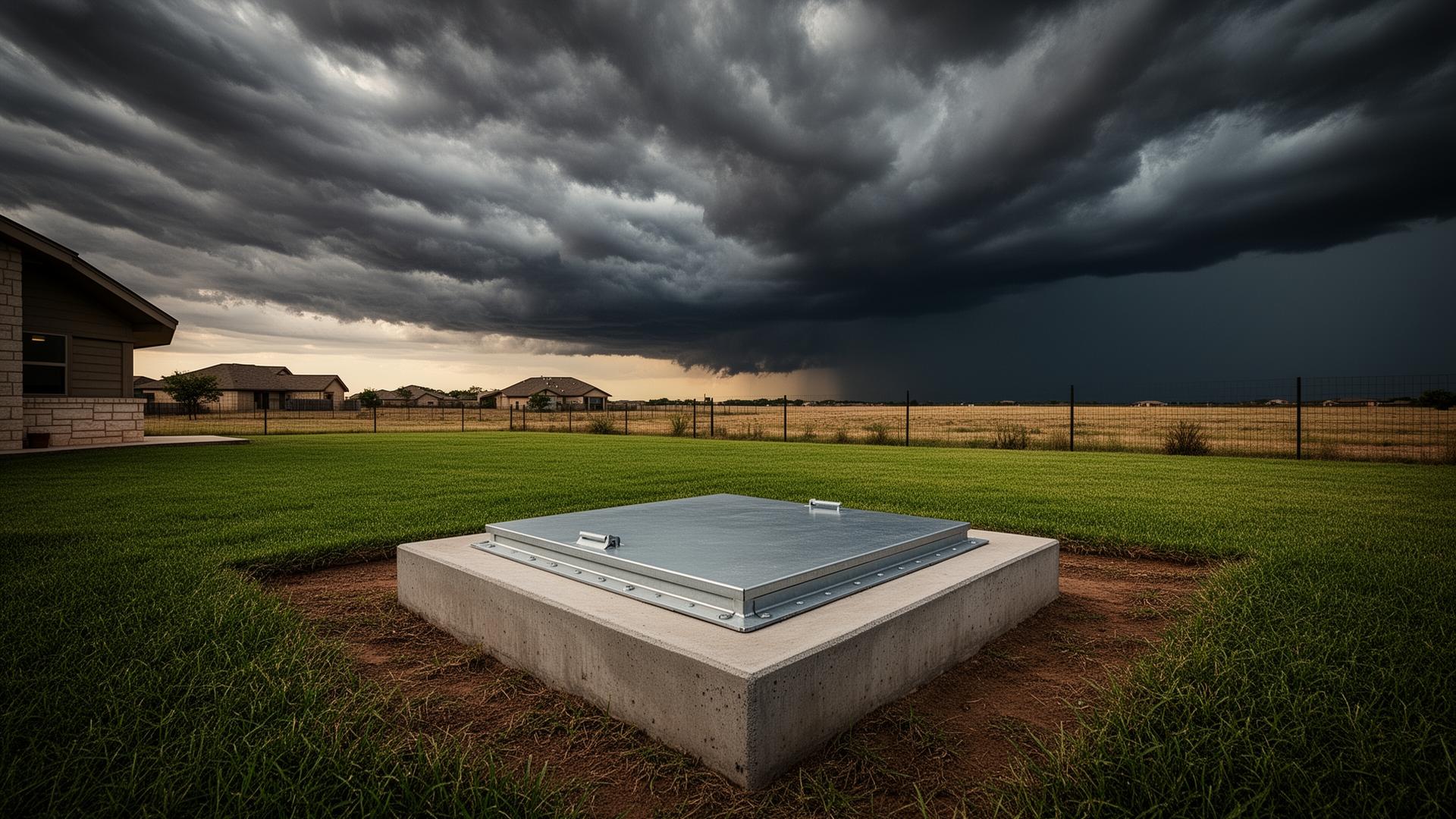
What kind of storm shelters does Sheltris install?
We install pre-cast concrete underground storm shelters. Every unit is built with 5,000 PSI concrete reinforced with ½-inch rebar on 12-inch centers and 10-gauge welded wire mesh. They're designed, tested, and rated for EF5 tornado conditions.
What's the difference between a storm shelter and a storm cellar?
A storm cellar is typically an older, unengineered underground space — often hand-built from block or stone. A modern storm shelter is a pre-engineered, factory-built structure tested to FEMA P-361 and ICC 500 standards for specific wind speeds and debris impact loads.
How many people can fit in a Sheltris shelter?
Our standard residential shelter comfortably fits 6–10 adults. Interior dimensions are approximately 92″ × 65″ × 75″. FEMA recommends 5–7 square feet per person for short-duration sheltering.
Can I use the shelter for storage between storms?
Absolutely. Many of our customers store emergency supplies, important documents, or seasonal items in their shelter year-round. Just keep the entry clear so you can access it quickly.
Underground vs. Above Ground
Is an underground shelter safer than an above-ground safe room?
Both meet the same FEMA P-361 standard and are tested against the same wind speeds and debris missiles. Underground shelters have the added advantage of earth shielding on all sides. Above-ground safe rooms offer easier walk-in access. The protection level is equivalent when both are properly engineered and installed.
Do underground shelters flood?
Not when properly installed. Our process includes a 6-inch compacted gravel base for drainage, butyl sealant on all joints, and grading the backfill to direct surface water away from the hatch. West Texas soil is generally low-moisture, which helps.
Can I install an underground shelter under my garage?
In many cases, yes. We assess your garage slab thickness, age, rebar layout, and utility locations during the site visit. Garage-floor installations are one of our most popular requests — you get underground protection without going outside.
What about above-ground safe rooms?
Sheltris specializes in underground concrete shelters, but we're happy to discuss your options. Check our comparison guide for a detailed breakdown of above-ground vs. below-ground protection.
Installation
How long does installation take?
One day for most residential properties. We excavate, set the gravel base, crane the shelter into position, seal it, backfill, and grade — all in a single visit. The city inspection is scheduled separately.
What does the installation process look like?
Site assessment → homeowner obtains permit → excavation → gravel base → crane placement → lid and seal → backfill and grading → walkthrough. The homeowner is responsible for obtaining the required building permit before installation. We provide all documentation needed to support the application.
Do I need to be home during installation?
We recommend it so we can walk you through the finished shelter and answer questions, but it's not strictly required. We'll coordinate timing that works for you.
Will installation damage my yard?
The excavation area and crane path will see some disturbance. We backfill and grade the area, but you should expect to re-seed or re-sod a roughly 12×12-foot area around the shelter location.
What about Lubbock's caliche soil?
Caliche is a dense calcium carbonate layer common across the South Plains. Our excavation equipment is sized for it. In some cases, caliche actually provides a more stable base for the shelter.
Pricing & Financing
How much does a storm shelter cost?
Our underground shelters range from approximately $3,500 to $8,500 fully installed, depending on site conditions and any optional features. That price includes excavation, crane, backfill, and the shelter unit itself.
Do you offer payment plans?
Yes. We offer monthly financing options starting at approximately $99/month through our financing partners. No prepayment penalties.
Does FEMA reimburse for storm shelters?
FEMA's Hazard Mitigation Grant Program (HMGP) and BRIC program can reimburse up to 75% of the cost of a qualifying shelter. The South Plains Association of Governments (SPAG) administers applications locally. We can provide the documentation needed for your application.
Does a storm shelter increase my home's value?
Buyer surveys in tornado-prone regions consistently show that storm protection is a valued feature. While appraisal methods vary, a FEMA-compliant shelter is a tangible, permanent improvement.
Standards & Testing
What does FEMA P-361 mean?
FEMA P-361 is the federal standard for safe rooms and storm shelters. It specifies design criteria for wind speed, debris impact, ventilation, and structural integrity. Our shelters are designed and tested to meet or exceed FEMA P-361 requirements.
What is ICC 500?
ICC 500 (Standard for the Design and Construction of Storm Shelters) is the building code standard that incorporates FEMA P-361 criteria into enforceable construction requirements. It covers everything from concrete strength to door latching mechanisms.
Has the Sheltris shelter been tested?
Our shelter design has been tested at Texas Tech University's National Wind Institute — the same facility that developed the Enhanced Fujita Scale. Testing includes debris impact (15 lb 2×4 at 100 mph), static pressure, and structural load tests.
What's the debris missile test?
The standard debris missile test fires a 15-pound 2×4 lumber board at 100 mph into the shelter walls, ceiling, and door. The shelter must prevent penetration and remain structurally functional after impact. Our concrete and steel door assemblies pass this test.
Permits & Regulations
Do I need a permit for a storm shelter in Lubbock?
Yes. The City of Lubbock requires a building permit for underground storm shelter installations. The homeowner is responsible for obtaining the permit before installation. We provide manufacturer specifications and documentation to support your application.
What are the setback requirements in Lubbock?
Lubbock requires shelters to be at least 3 feet from property lines and 5 feet from any structure. Exact setbacks depend on your lot and zoning. We can help you understand placement requirements during the site assessment.
How long does the permit take?
Typical permit processing in Lubbock takes 5–10 business days. We provide all required engineering documentation, site plans, and manufacturer specifications that you'll need for the application.
Does the shelter need to be inspected?
Yes. After installation, a City of Lubbock building inspector will verify the shelter placement, depth, drainage, and compliance with the approved permit. The homeowner is responsible for scheduling the inspection with the city.
Still Have Questions?
We'd rather answer your question directly than have you guess. Call us or request a quote — we'll get back to you the same business day.