
Tornado Preparedness for Lubbock & West Texas
Lubbock sits in one of the most tornado-prone regions in the country. Between 2000 and 2024, Lubbock County recorded over 60 tornado events. Knowing what to do — and having a plan before the sirens go off — is the difference between reacting and being ready.
Know the Warning Signs
Tornado warnings from the NWS give you an average of 13 minutes. But the sky often tells you first. Here's what to watch for on the South Plains.
Dark, greenish sky
Often indicates large hail and rotation in a thunderstorm.
Large hail with no rain
A common precursor to tornado formation on the South Plains.
Loud continuous roar
Doesn't fade like thunder — it keeps going. That's wind.
Wall cloud or rotating clouds
A lowered area of a storm base with visible rotation. Take shelter immediately.
Debris cloud near the ground
Tornadoes can be invisible. If you see debris at ground level, a tornado is there.
What to Do When a Warning Is Issued
Get to your shelter NOW
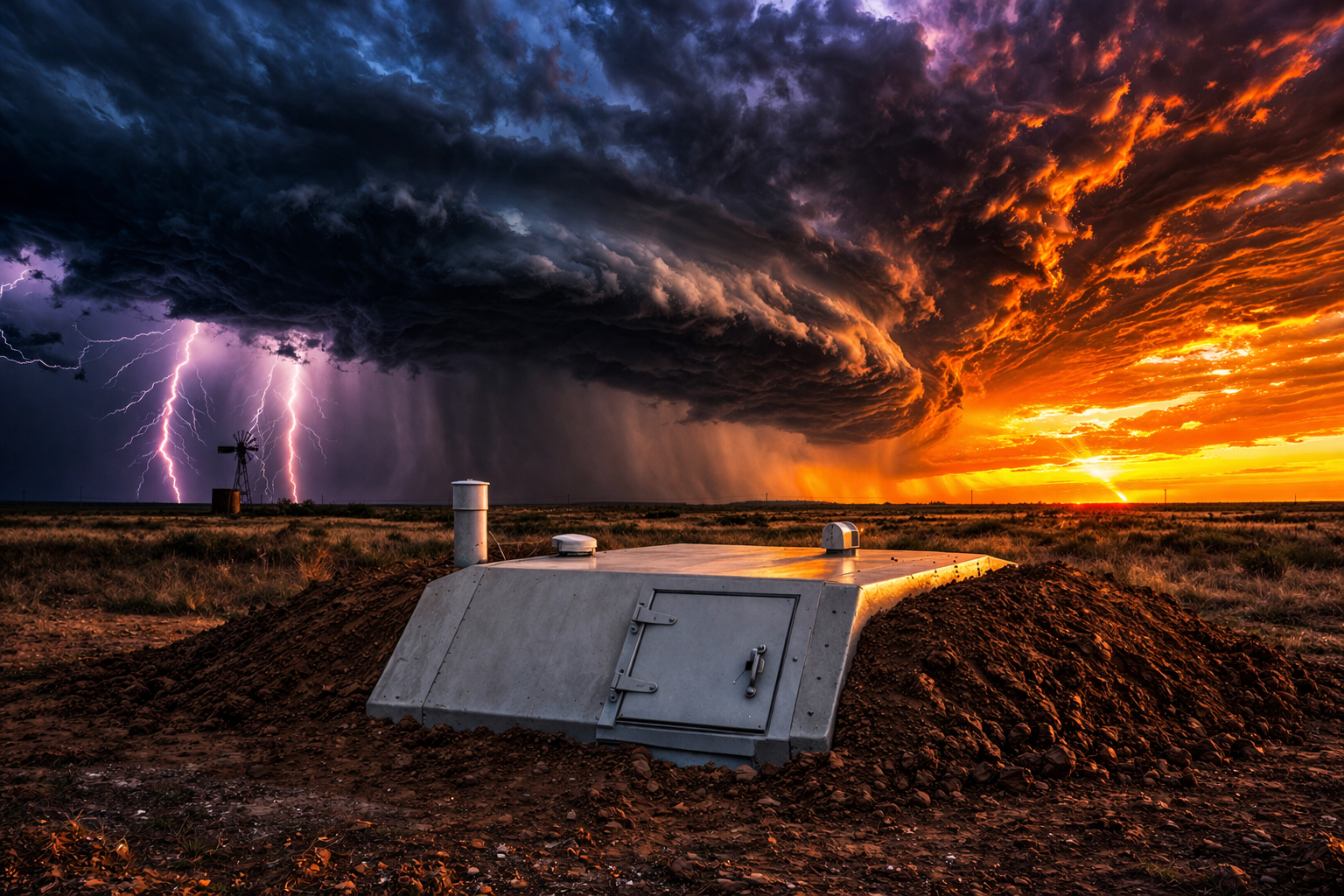
If you have an underground shelter, get in. Close and latch the door. Every second counts once a warning is issued — the average lead time for a tornado warning in West Texas is 13 minutes.
No shelter? Go interior and low
Move to the lowest floor of a sturdy building. Find a small interior room — bathroom, closet, hallway — away from windows. Get under something sturdy and cover your head.
Never stay in a mobile home
Mobile homes provide almost zero protection, even with tie-downs. If you live in a mobile home, your plan should include a nearby permanent structure or shelter.
Avoid overpasses and vehicles
Highway overpasses are not shelters. Wind accelerates under them. If you're caught driving, pull over and get to a low ditch — never try to outrun a tornado.
Build Your Tornado Kit
Keep this kit in or near your shelter. Check it every March before storm season starts. Replace batteries, rotate water, and update medications.
- NOAA weather radio with backup batteries
- Flashlight, extra batteries, and glow sticks
- First aid kit with 3-day supply of medications
- Water — 1 gallon per person per day (3-day minimum)
- Non-perishable food and a manual can opener
- Important documents in a waterproof bag
- Phone charger (battery pack or car charger)
- Sturdy shoes and work gloves
Make a Family Plan
Talk through these questions with everyone in your household before storm season hits:
- Where is our shelter? Everyone should know the exact location — and be able to reach it in under 2 minutes.
- Who grabs the kids? The pets? Assign roles so nobody assumes someone else is handling it.
- How will we get alerts? NOAA weather radio, Wireless Emergency Alerts on your phone, and local TV are the three most reliable sources in the 806.
- What if we're not home? Know where the nearest shelter or interior room is at work, school, and church.
Practice your plan at least once a year. The National Weather Service recommends conducting a family tornado drill during Severe Weather Awareness Week each spring.
The Best Plan Includes a Shelter
A closet or bathroom helps — but it's not tested. A FEMA-compliant underground shelter is the only residential structure rated to protect your family from EF5 tornado winds and debris. The shelters Sheltris installs are built from 5,000+ PSI reinforced concrete, tested at Texas Tech's National Wind Institute, and professionally installed in a single day.