Above Ground vs. Below Ground Storm Shelters
Both types can be rated for EF5 tornadoes. The difference is how they achieve protection — and which one makes sense for your property.
The Core Difference Is Physics
A tornado generates two destructive forces simultaneously: horizontal wind pressure (up to 250+ mph) and vertical uplift (suction that can pull structures off their foundations). Every storm shelter must resist both.
An above-ground shelter resists these forces through structural engineering — thick steel or concrete walls, reinforced doors, and anchor bolts driven into a concrete slab. The shelter stays in place because it's bolted down hard enough to overcome wind forces trying to move it.
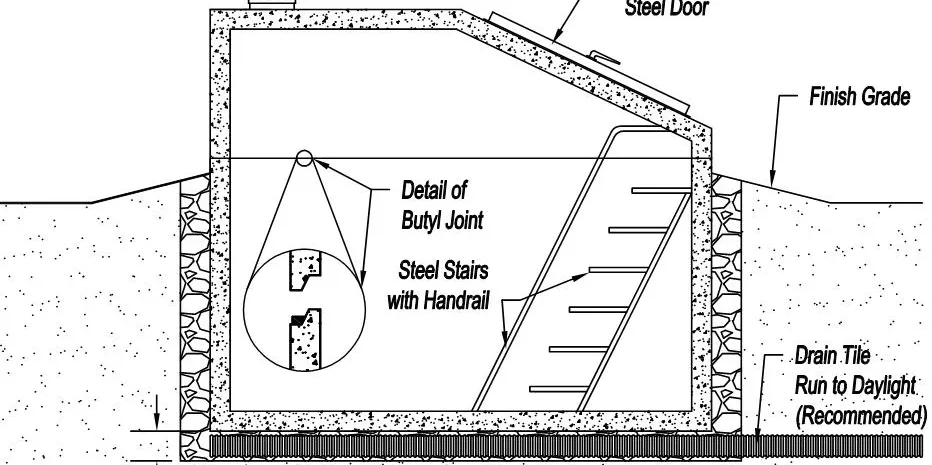
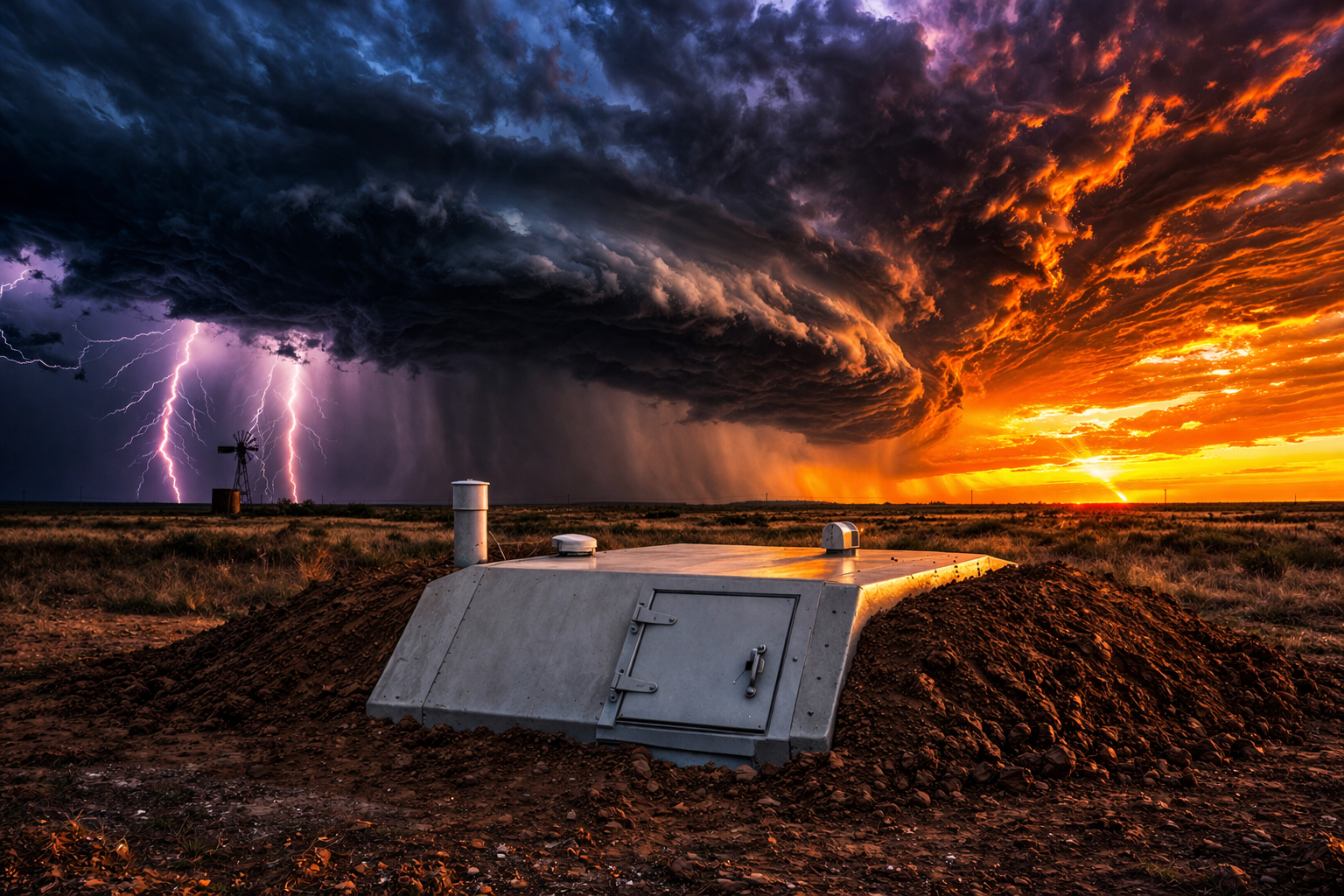
An underground shelter takes a different approach. Set below grade and covered by earth, it doesn't need to resist wind uplift at all — there's nothing for the wind to grab. The only exposed surface is the hatch, which is designed to withstand debris impact. Everything else is shielded by tons of soil.
Both approaches work. But the margin of safety is different. Underground shelters have fewer potential failure points because they rely on the earth instead of engineered anchoring systems.
Side-by-Side Comparison
| Feature | Underground | Above-Ground |
|---|---|---|
| Wind Rating | EF5 (250+ mph) | EF5 (250+ mph) |
| Protection Method | Earth shielding + mass | Structural engineering + anchoring |
| Debris Exposure | Hatch only | All walls, ceiling, and door |
| Wind Uplift Risk | None — buried below grade | Dependent on anchor bolt integrity |
| Weight (typical) | ~15,000 lbs (concrete) | 1,500–4,000 lbs (steel/concrete) |
| Requires Excavation | Yes | No |
| Accessibility | Stairs + hatch | Walk-in door (ADA-friendly) |
| Water Table Concern | Low risk in West TX | Not applicable |
| Interior Noise | Quiet — earth dampens sound | Louder — above-grade exposure |
| Yard Impact | Flush hatch after grading | Visible structure in garage/home |
| Maintenance | Minimal — hatch & hinge | Anchor bolts, seals, rust prevention |
| Cost Range (TX) | $5,000–$12,000 | $3,000–$12,000 |
| Installation Time | One day (typical) | Half day to one day |
| Lifespan | Decades — concrete doesn't corrode | 20+ years with maintenance |
Which One Is Right for You?
Choose Underground If…
- Your property has adequate equipment access (10+ feet of clearance)
- The water table is low (standard in West Texas and the South Plains)
- You want maximum debris protection with minimal exposed surface area
- You prefer a shelter that requires virtually zero maintenance
- You want the shelter invisible in your yard — just a flush hatch at ground level
- You're building a new home and can plan excavation into the construction timeline
Choose Above-Ground If…
- A family member uses a wheelchair or has mobility limitations
- Your property has a high water table (common in East TX and Gulf Coast)
- You live in a condo, townhome, or property with no yard for excavation
- You want the shelter to double as a panic room, safe room, or secure storage
- Your garage layout accommodates a corner unit without blocking vehicles
- Budget is the primary constraint — entry-level above-ground units start lower
The West Texas Advantage
Geography matters. The South Plains sits at 3,200 feet elevation with a water table typically 50 feet or more below the surface. Annual rainfall averages 18 inches — one of the driest regions in Texas. These conditions make underground installation straightforward and eliminate the flooding concerns that push coastal and East Texas homeowners toward above-ground options.
The caliche layer — a hard calcium carbonate deposit common in Lubbock soil — adds excavation complexity but doesn't prevent it. Our crew has excavated through caliche on nearly every job. It's part of the process, and we account for it in every quote.
For the vast majority of residential properties in Lubbock, Spur, Roaring Springs, and across the South Plains — underground concrete is the best option. It's what we specialize in. It's what we install. And it's what we'd put in our own yards.