
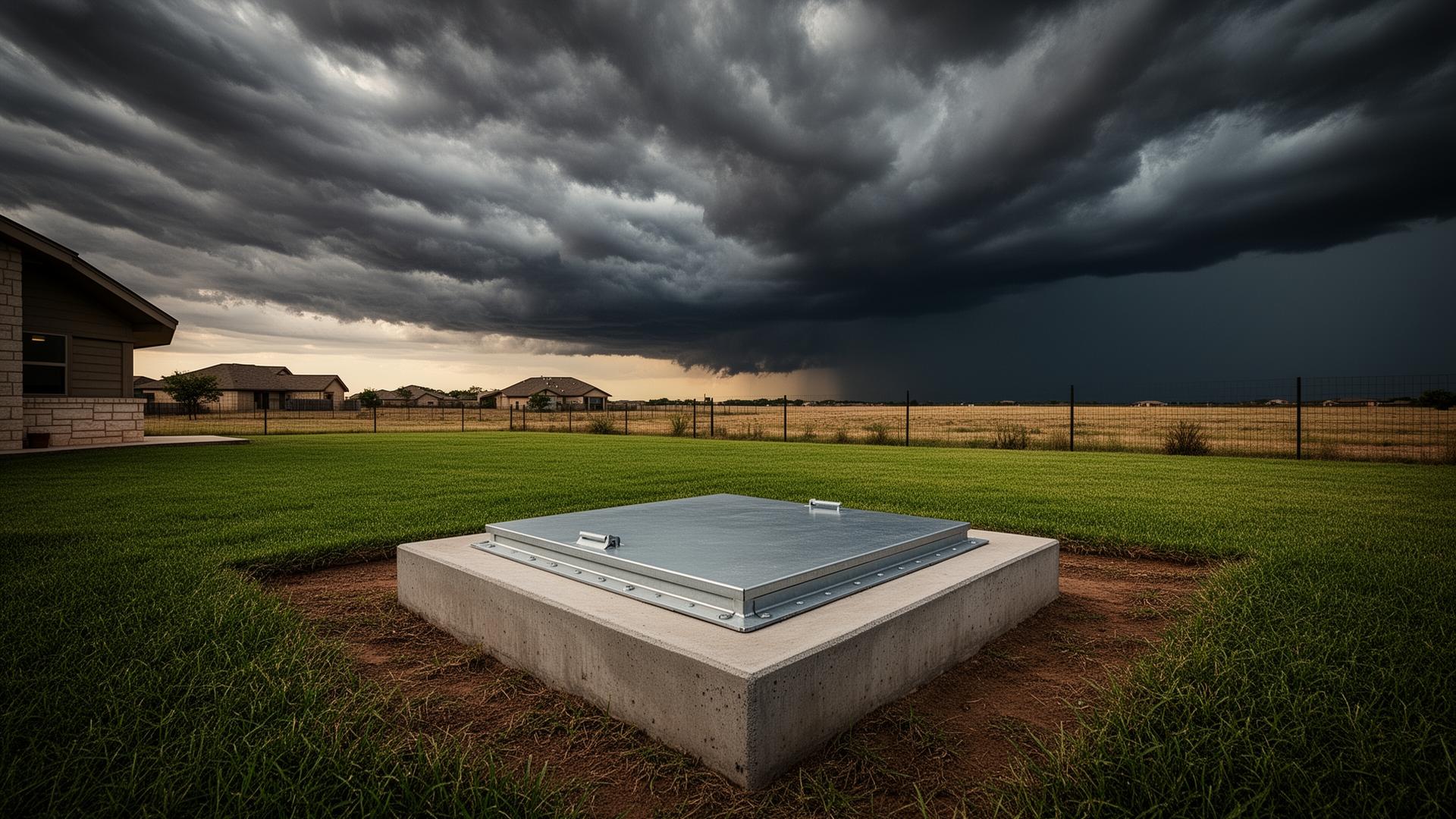
Above-Ground Storm Shelters & Safe Rooms
Not every property can accommodate excavation. Above-ground safe rooms provide EF5-rated protection inside your home — a solid option when underground isn't feasible.
What Is an Above-Ground Safe Room?
An above-ground storm shelter — often called a "safe room" — is a hardened enclosure installed inside or adjacent to your home. It's typically built from reinforced steel or concrete and bolted to a concrete slab floor. The door, walls, and ceiling are engineered to resist 250 mph winds and impact from tornado-carried debris.
FEMA P-361 and ICC 500 apply the same wind and debris impact requirements to above-ground and underground shelters. The difference isn't in the standard — it's in how the shelter achieves protection. Above-ground rooms resist forces through structural engineering and anchoring. Underground rooms are shielded by the earth.
Common installation locations include a garage corner, a master closet, a laundry room, or a purpose-built exterior room. The key requirement is a concrete slab floor capable of holding anchor bolts under extreme wind loads.
Advantages and Limitations
Advantages
- No excavation required — faster installation
- Walk-in access (no stairs or hatch to navigate)
- Works in areas with high water tables
- Ideal for residents with mobility concerns or physical disabilities
- Can double as a secure storage room or panic room
- Visible and easy to access during severe weather
Limitations
- Takes up interior floor space (garage, closet, or room)
- Requires anchor bolts into concrete slab — anchor integrity is critical
- Exposed to external debris impact on all sides
- Interior can be louder during a tornado than underground
- Visible structure may affect garage or room layout
- Must meet strict anchoring requirements per ICC 500
Above-Ground vs. Underground — Detailed Comparison
Protection Level
High — rated for EF5 when properly anchored and installed per ICC 500.
Maximum — the earth provides natural shielding against wind uplift and debris.
Debris Impact
Walls and door must withstand direct hits from tornado-carried debris. Steel flexes under extreme impact; concrete absorbs it.
Only the hatch is exposed. The rest of the shelter is protected by several feet of earth.
Wind Uplift
Resisted entirely by anchor bolts. If the slab cracks or anchors fail, the shelter can shift or separate.
Not applicable. A 15,000-pound concrete shelter buried below grade doesn't uplift.
Accessibility
Walk-in door at floor level. Best for elderly residents, wheelchair users, or families with small children who can't navigate stairs quickly.
Requires descending stairs through a hatch. Handrails are standard, but access takes more time and mobility.
Cost
Typically $3,000–$12,000 depending on size, material, and features.
Typically $5,000–$12,000 including excavation, placement, sealing, and grading.
Maintenance
Periodic inspection of anchor bolts, door seals, and ventilation. Steel units may require rust treatment over time.
Minimal. Concrete doesn't corrode. Periodic hatch inspection and hinge lubrication.
When Above-Ground Is the Right Choice
Above-ground safe rooms aren't a compromise — they're the right solution for specific situations. If your property has a high water table that makes excavation impractical, an above-ground room is the correct call. If a family member uses a wheelchair or has mobility limitations that make descending stairs dangerous in an emergency, walk-in access is essential.
In parts of East Texas and along the Gulf Coast, water tables can be within a few feet of the surface. Underground shelters in those conditions require expensive waterproofing systems and pumps. Above-ground rooms avoid the issue entirely.
In West Texas — where water tables are typically 50+ feet below the surface and soil conditions favor excavation — underground concrete is almost always the better option. But we evaluate every property individually.
Get a Free Site AssessmentOur Honest Recommendation
We specialize in underground concrete because we believe it provides the highest level of protection available. A 15,000-pound pre-cast concrete shelter buried below grade doesn't rely on anchor bolts, doesn't flex under wind pressure, and doesn't expose any surface area to debris except the hatch.
If your property can accommodate excavation — and in the South Plains, most can — underground concrete is what we'd install in our own yards. That's the standard we hold ourselves to.
See our underground shelter specifications