
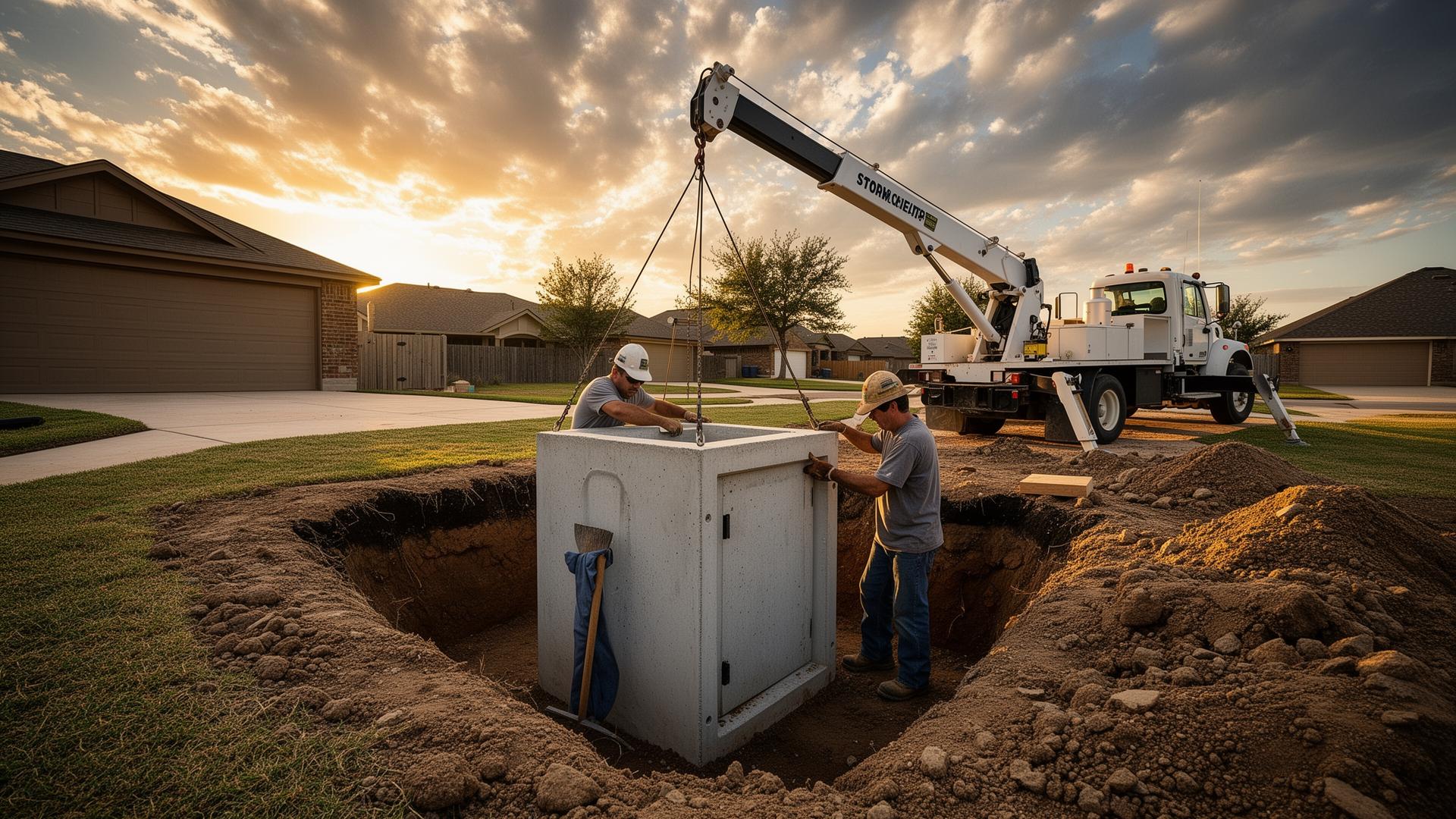
Underground Concrete Storm Shelters
Pre-cast concrete. Rebar reinforced. Rated for EF5 tornadoes. Installed in one day.
Why Underground Concrete Is the Highest Level of Protection
Underground shelters eliminate the two biggest threats in a tornado — wind uplift and flying debris. A shelter below grade is shielded by the earth itself. No anchor system to fail. No lightweight wall to flex. Just mass, density, and physics working in your favor.
Steel shelters flex under extreme pressure. Fiberglass can crack on high-velocity debris impact. Concrete at 5,000 PSI with steel reinforcement does neither. It absorbs impact and resists deformation. That's not marketing — it's material science.
FEMA P-361 guidelines require resistance to 250 mph winds and representative debris impact for tornado shelters. ICC 500 incorporates these requirements into enforceable building code. Our shelters are manufactured to meet both.
Shelter Specifications
How We Install Your Underground Shelter
Site Assessment
We evaluate your property for placement, soil conditions, utility clearances, and drainage.
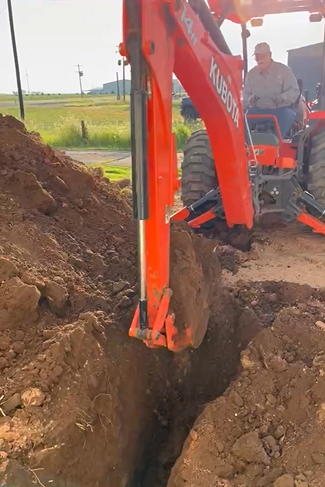
Excavation
Professional excavation of the shelter pit, accounting for the caliche layer common in Lubbock soil.
Gravel Base
A compacted gravel base provides proper drainage and a stable foundation.
Shelter Placement
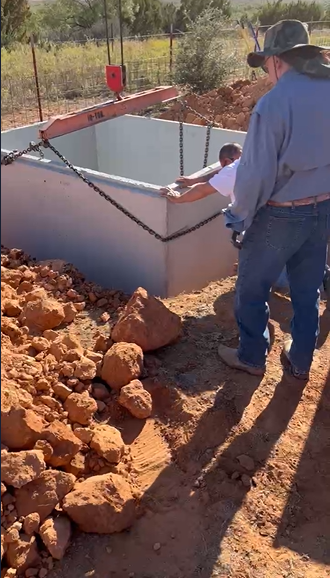
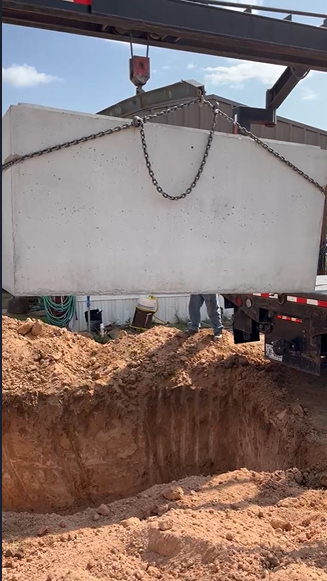
The pre-cast concrete shelter is lowered into position using a crane.
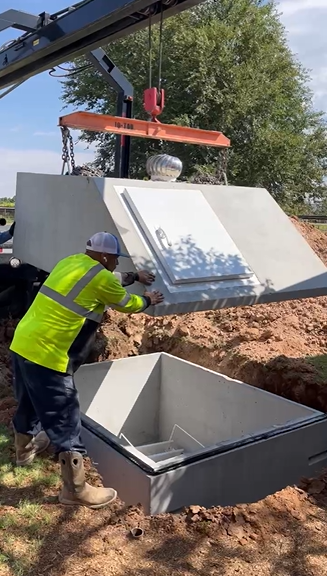
Sealing & Waterproofing
Butyl sealant is applied and the lid is secured with manufacturer-specified straps and bolts.
Backfill & Grading
Area backfilled and graded to direct water away from the shelter.
Walkthrough
We walk you through your shelter and answer any questions.
Underground vs. Above Ground
Above-ground safe rooms serve a purpose. For homes with high water tables, for residents with mobility concerns, or for properties where excavation isn't feasible, an above-ground option can provide meaningful protection.
But if your property allows it and you want the highest level of protection, underground concrete is what we recommend. It's what we specialize in. It's what we install. And it's what we'd put in our own yards.
A 15,000-pound concrete shelter buried below grade doesn't shift in saturated soil. It doesn't rely on anchors. It doesn't flex. The earth itself is part of the protection system — and that's an advantage no above-ground option can replicate.
Read the full comparison guide